Reported Benefits and Consequences
A balanced view of why people report using kratom or 7-OH and the dependence, withdrawal, respiratory, GI, and mental-health risks that can follow.
Updated
5 sources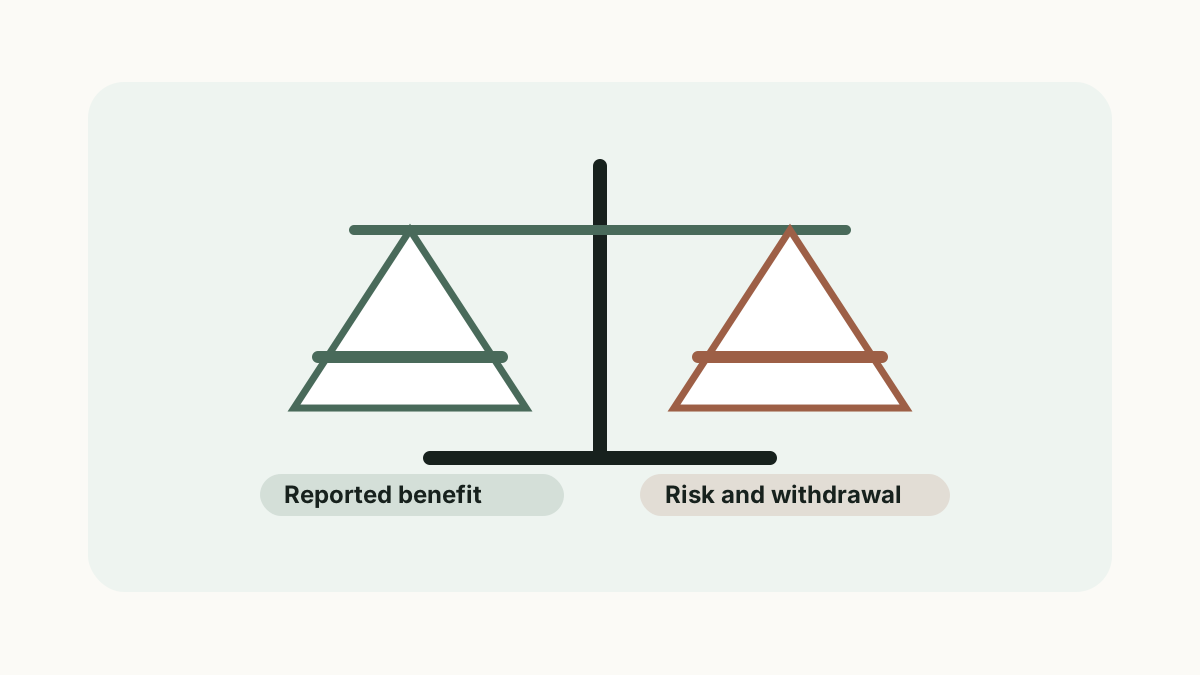
Direct answer
Reported relief does not establish that concentrated 7-OH is a safe or effective treatment. FDA warns about addiction, withdrawal, and respiratory depression, and states that no 7-OH drugs are approved. FDA letter to health care professionals FDA July 2025 scheduling recommendation
Take the original concern seriously
A person looking for relief may be dealing with pain, poor sleep, anxiety, or another difficult problem. Ask what they hoped the product would change and what changed in practice. Listening does not require endorsing the product.
FDA's assessment discusses reports of self-treatment and opioid-like effects. Those reports are not controlled evidence of medical benefit. FDA 7-OH scientific assessment
Look beyond the first effect
For a useful conversation, separate the desired effect from the wider consequences. Has sleep improved overall? Has use become more frequent? Is the person spending more time or money than intended? What happens when a serving is delayed?
Do not assume every person follows the same progression. A checklist can organize observations but cannot establish cause or diagnosis.
Why the formulation matters
FDA warns that products can be inaccurately labeled or marketed as kratom while containing concentrated 7-OH. A product's name is not enough to determine what someone took. FDA July 2025 scheduling recommendation
Keep the package and distinguish the labeled amount per serving from the amount actually used. Do not equate botanical leaf with a concentrated tablet.
What should not wait?
Suspected overdose is an emergency: call 911. Give naloxone if available and stay with the person until emergency assistance arrives. CDC overdose response guidance
For use that is becoming hard to control, arrange a clinician visit rather than using this page as a dosing or taper plan. SAMHSA offers treatment referrals at 1-800-662-4357. SAMHSA National Helpline
Read Signs of Dependence and Withdrawal and Get Help for next steps.